

Managed PostgreSQL
Log destinations
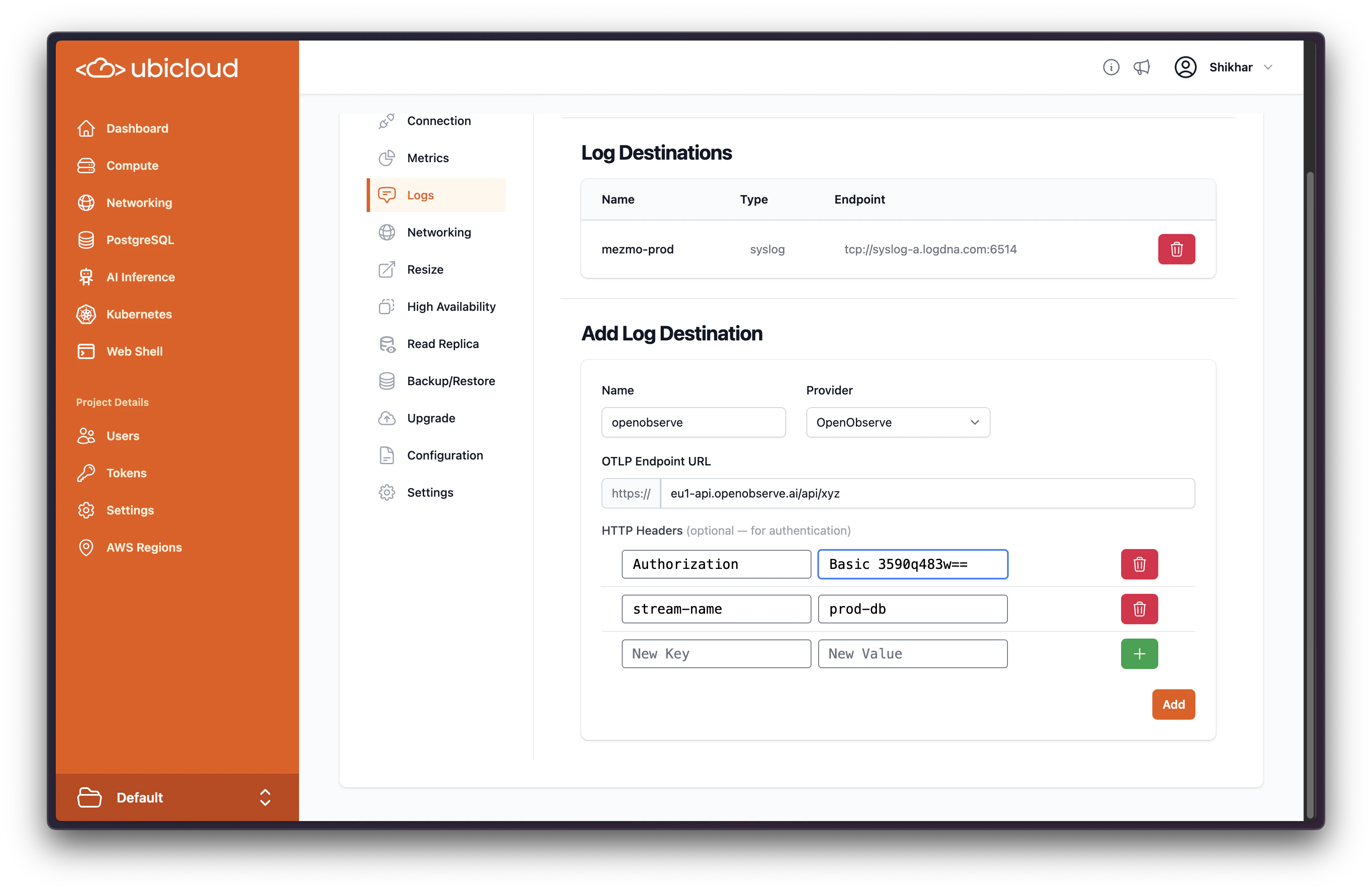
You can now forward Postgres logs to third-party providers including Mezmo, OpenObserve, and Honeybadger from your Postgres resource. Configure one or more log destinations per resource and Ubicloud will ship logs continuously from your instance.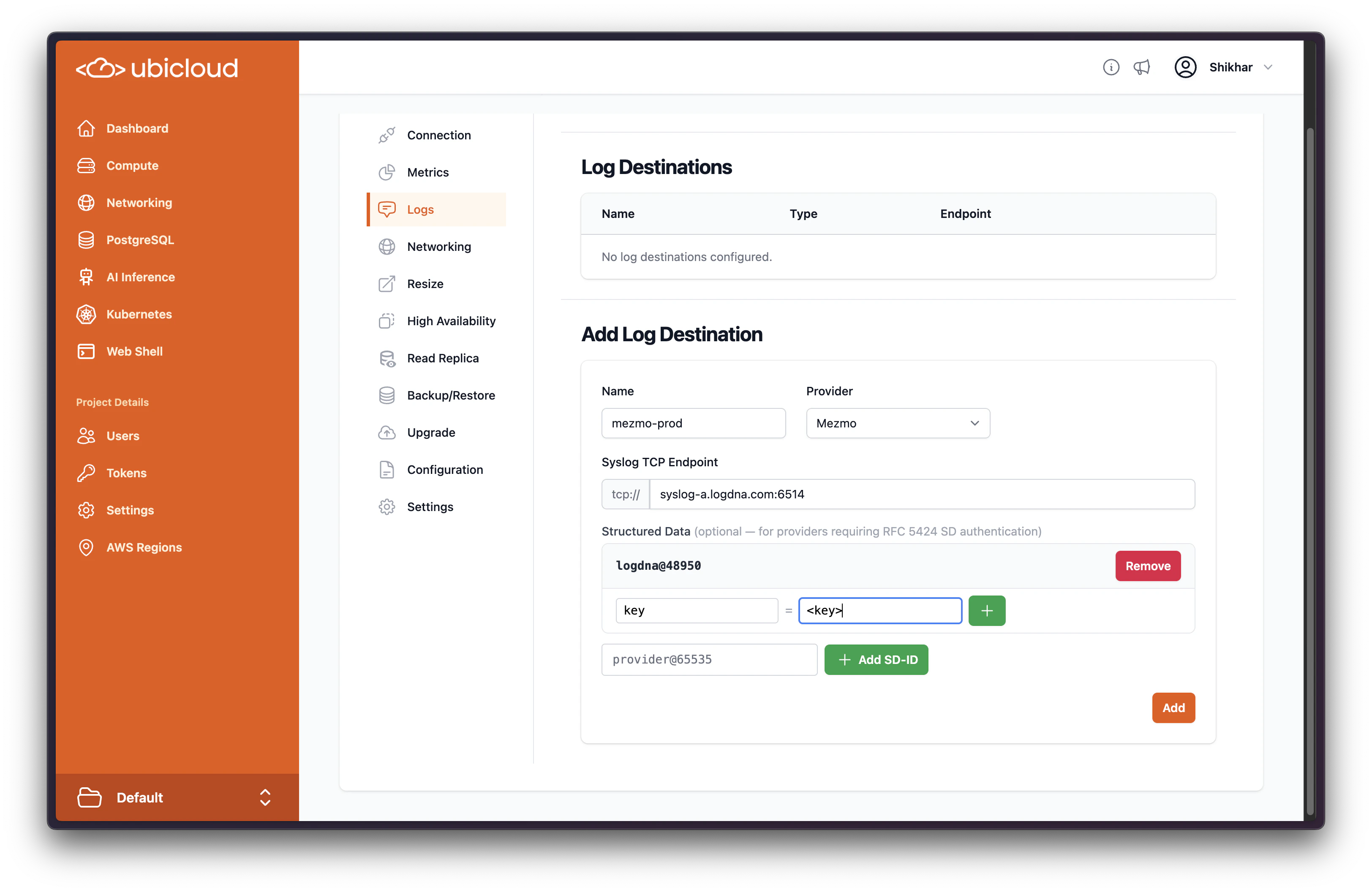
LZ4 compression by default for WAL and TOAST
New Postgres resources now use LZ4 for WAL and TOAST compression by default. This reduces replication bandwidth, letswal_buffers carry more, lessens the impact of slot lag from logical replication, and is backwards compatible — existing TOAST values keep their original compression method.
Disk-full protection
When a Postgres data disk approaches capacity, Ubicloud now intervenes progressively to keep the database safe: throttling kicks in at 95% to give standbys time to catch up,default_transaction_read_only is automatically toggled below a 5 GiB threshold, and Postgres is restarted to terminate long-running write connections below 3 GiB. On disks smaller than 64 GB the thresholds scale down. Root-disk usage is also observed and paged on.
Higher file descriptor limits and tighter TCP keepalive
LimitNOFILE is now set to 65536 on the postgresql and pgbouncer systemd units, giving high-connection workloads more headroom. TCP keepalive timers on Postgres connections have also been tightened from Linux’s default 2-hour grace period down to one minute, so dead connections are detected and reclaimed quickly.
pgbouncer improvements
pgbouncer auth functions have been moved into a dedicated ubi_admin database, so user actions on template1 (deleting auth functions, creating databases from a different template) no longer break authentication. The max_db_connections setting now also honors a user_config override when sizing the pool.
API and listing updates
target_server_count is now exposed in the Postgres API response and OpenAPI schema, so you can read the expected number of servers (primary + standbys) for a resource. The PostgreSQL list endpoint also returns resources sorted alphabetically.
GitHub Runners
Cache entry scope in the API
The cache listing API, CLI, and SDK now return thescope (branch name) for each cache entry. Previously this information was visible in the dashboard only, making it impossible to filter caches by branch programmatically.